How to Read a Specialty Coffee Menu
Confused by terms like "washed process," "SCA score," and "single origin"? Here's a plain-English guide to specialty coffee menus.
How to Read a Specialty Coffee Menu
You walk into a specialty cafe. The menu board lists beans from "Yirgacheffe, Ethiopia" with "notes of blueberry, jasmine, and dark chocolate" via "washed process." There's an "SCA score: 87" next to it. The filter options include "V60, AeroPress, and Kalita Wave."
If that sounds like a foreign language, you're not alone. Specialty coffee has its own vocabulary, and menus can feel like they're designed to intimidate newcomers.
They're not. Here's what everything means.
The Drinks
Espresso-Based
- Espresso. A concentrated shot of coffee (25-30ml) extracted under pressure. Intense, thick, and the base for most other drinks.
- Doppio. Double espresso. This is actually what most cafes pull by default when you order "an espresso."
- Flat White. Double espresso + velvety steamed milk in a small cup. Coffee-forward. Full guide here.
- Cappuccino. Espresso + steamed milk + thick foam. More airy than a flat white.
- Latte. Espresso + lots of steamed milk + thin foam. Mild and milky.
- Cortado. Equal parts espresso and steamed milk. Small, strong, and quick.
- Macchiato. Espresso "stained" with a small amount of milk foam. Not the caramel milkshake you get at chain cafes.
- Americano. Espresso diluted with hot water. Similar strength to filter but different flavor profile.
Filter / Brew Methods
- V60. A cone-shaped pour-over brewer. Produces clean, bright coffee. The barista pours water over the grounds in a specific pattern.
- AeroPress. A compact brewer that uses air pressure. Versatile, can produce everything from espresso-like concentrate to clean filter coffee.
- Kalita Wave. A flat-bottomed pour-over. More forgiving than a V60, produces a balanced, even extraction.
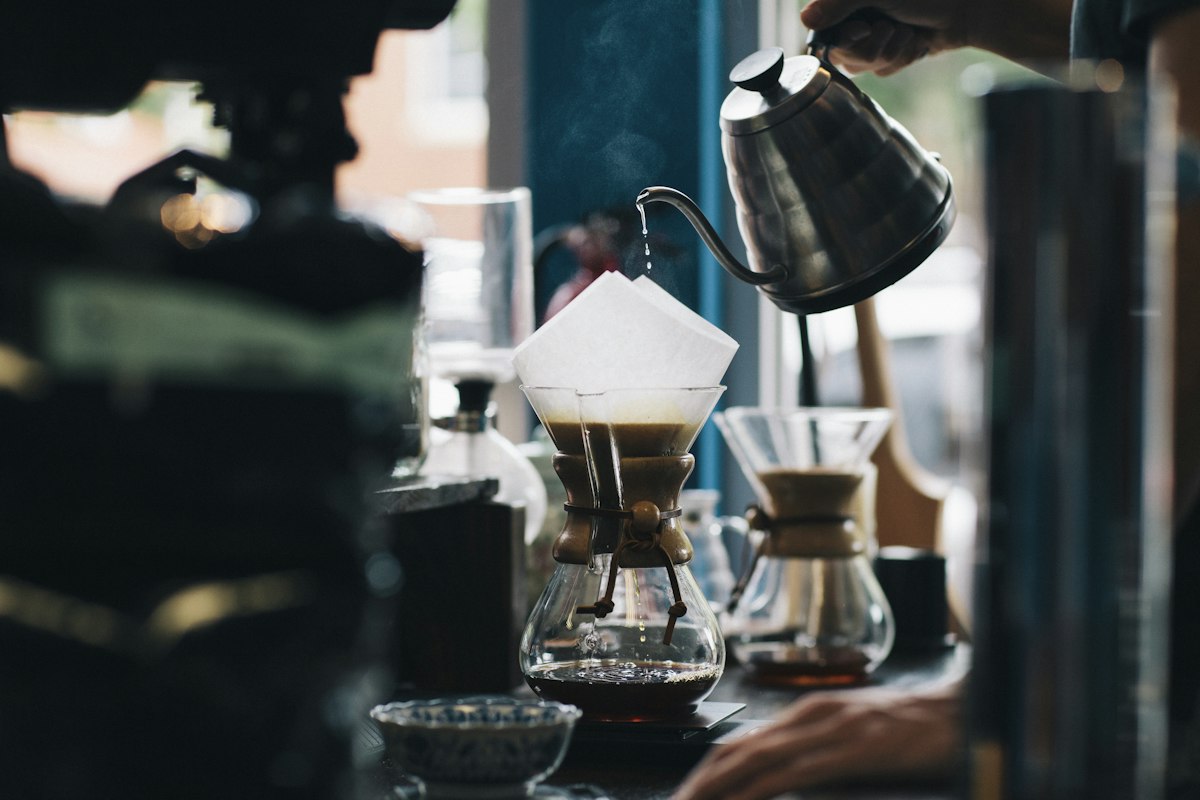
- Chemex. A glass pour-over with a thick filter. Produces very clean, light-bodied coffee.
- Batch Brew. Coffee brewed in bulk and served from a thermos or airpot. Usually the most affordable filter option. Quality varies.
- Cold Brew. Coffee steeped in cold water for 12-24 hours. Smooth, sweet, low acidity. Served over ice.
The Bean Information
Origin
Where the coffee was grown. Climate, altitude, and soil all affect flavor.
- Single Origin. Beans from one country, region, or farm. The flavor reflects that specific place.
- Blend. Beans from multiple origins mixed to create a balanced, consistent flavor. Often used for espresso because the mix of beans creates a rounder taste.
Tasting Notes
The flavors the roaster detected when cupping (professionally tasting) the coffee. These are not added flavors. A coffee with "blueberry notes" doesn't have blueberry in it. It naturally tastes like blueberry due to its origin, variety, and processing.
Common tasting note categories:
- Fruity: Berry, citrus, stone fruit, tropical
- Sweet: Caramel, chocolate, honey, brown sugar
- Floral: Jasmine, rose, lavender
- Nutty: Almond, hazelnut, walnut
- Spicy: Cinnamon, clove, black pepper
If you're new, don't stress about detecting every listed note. Just notice whether you like it or not.
Processing Method
How the coffee cherry was removed from the bean after harvesting. This dramatically affects flavor.
- Washed. The fruit is removed before drying. Produces clean, bright, origin-transparent flavors. Most common method.
- Natural. The whole cherry dries around the bean. Produces fruity, sweet, heavier-bodied coffee. Common in Ethiopia and Brazil.
- Honey. Some fruit left on the bean during drying. A middle ground between washed and natural. Sweet, balanced.
- Anaerobic / Carbonic Maceration. Newer, experimental methods. Fermentation in sealed containers. Can produce intense, unique flavors.
SCA Score
The Specialty Coffee Association (SCA) scores coffees on a 100-point scale. Anything above 80 is considered "specialty grade."
- 80-84: Good specialty coffee
- 85-89: Excellent specialty coffee
- 90+: Exceptional, rare, and usually expensive
Most cafes serve beans scoring 83-88. Scores above 90 are competition-level and priced accordingly.
How to Use This Knowledge
You don't need to memorize all of this. Just use it as a reference:
- Know what you like and ask for it. "I like fruity, bright coffees" or "I prefer something chocolatey and smooth."
- Try different origins. Ethiopian one week, Colombian the next. You'll develop preferences quickly.
- Ask the barista. They deal with this vocabulary all day. A quick "what would you recommend?" is always welcome.
Explore Specialty Cafes
CafeRadar helps you discover specialty cafes and explore their offerings. Our community reviews focus on coffee quality, so you know what to expect before you visit.
See also: How to Choose a Specialty Coffee Shop | Specialty Coffee Origins Guide
More from the Blog

Discover cafes with CafeRadar
Find the best coffee shops near you with cafe-specific filters, check-in rewards, and honest community reviews.
Download CafeRadar